Review by Brooke Thompson
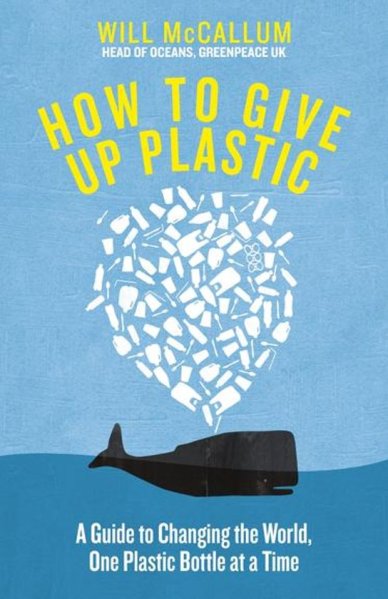 Greenpeace activist Will McCallum has written a simple, straightforward, hopeful guide for us. It shows practical ways we can each help reduce the rising tide of plastic pollution.
Plastic litters the tide line of our beaches. Plastic trash is scattered along our roadways. Add to this the invisible, insidious plastic films filling the oceans with micro beads, plastic pellets, and microplastics from our synthetic clothing. Our lives are awash in throwaway plastic.
McCallum zeroes in on single-use plastics: bags, cutlery, cups, straws, bottles, lids, and packaging. They are used once, tossed away, then take centuries to break down. When these plastics reach the ocean, seabirds, fish and whales ingest them and often die. It is here with these single use items that individuals can have the largest impact.
How to Give Up Plastic offers practical ways to reduce plastic where we live: the bathroom, the bedroom, the kitchen, on the go, at the office, in the community. Each chapter has a chart to write down a personal plastic-free plan.
McCallum encourages us to make new habits: take a shopping bag to the grocery store, bring your own coffee cup to work, bring your own water bottle in the car. And he deputizes us to share these choices with others. The guide offers strategies to persuade our bosses and local business owners to plan for reducing plastics in the workplace. McCallum offers inspiring interviews with community organizers who have led successful campaigns to reduce plastic pollution.
Plastic was invented 111 years ago. (It seemed like a good idea at the time.) Now, we humans are being called upon to clean up the mess. This book offers simple ways to become plastic-free right here, right now.
For more inspiration: