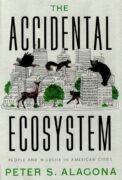
Just after we published our Summer 2024 “Nature in the City” issue of Salish Magazine, I stumbled upon this book by Peter S. Alagona. The subtitle is “People and Wildlife in American Cities.”
I had never really put ecosystems and cities in the same thought before, but the book points out that cities do, indeed, have their own ecosystems. These have developed over centuries of city growth, suburb growth, and other human impacts on the lands. But cities have two big differences from natural ecosystems: they contain human-made structures, and they are places where large quantities of resources are imported and waste is exported.
The book builds up to these observations through an overview of the history of human development. And then it takes things a step further by discussing some of the problematic processes such as eliminating apex predators, reducing ecosystem diversity, and generally addressing the symptoms of problems rather than focusing on systemic solutions.
This book added a new dimension to my understanding of how we are impacting nature and things we need to consider as we move forward.