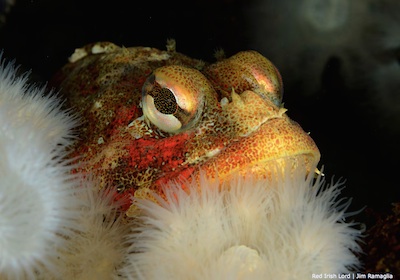
 For most people living in the Pacific Northwest, seeing firsthand the otherworldly creatures who live underwater isn’t an option. We are generally stuck viewing mammals with bilateral symmetry, a few hundred dozens of invertebrates that we generally shrink from or try to kill, and an assortment of plants that we designate as ornamental, native, or invasive. However, when photographers point their cameras underwater, a whole host of other possibilities emerge. Not only can we see fish that we don’t normally see alive and in their normal habitat, but we can see creatures of all shapes and sizes, some that even look like they originated from a science fiction novel.
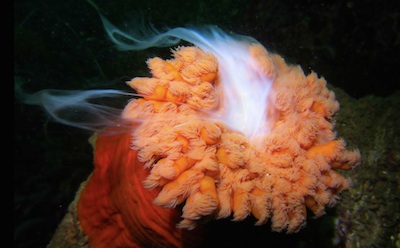 Is it possible to further feather the nest? What if I claimed that we can see not just these creatures, but get glimpses of their behavior…behavior that is every bit as strange as the shapes of their bodies? Maybe you just want to believe this. You’re in luck. The Pacific Northwest Underwater Photographic Society publishes such photographs in their e-Magazines. Visit their web site and subscribe to their publication. Its FREE.
Photos
Recent Media Articles
Ian’s Ride

In Ian’s Ride, Karen Polinsky tells an inspiring story of Ian Mackay learning ways to approach life after he had been paralyzed from the neck down. One of the things I especially liked about the story was how it focused on the process of finding solutions rather than dramatizing a negative view of the situation.
Our Oceans

A five-episode series, each one about a different ocean. The underwater video is stunning, and it does a good job of pointing out ecosystem interconnections.
The Accidental Ecosystem

Cities do, indeed, have their own ecosystems. These have developed over centuries of city growth, suburb growth, and other human impacts on the lands. This book added a new dimension to my understanding of how we are impacting nature.
Earth For All

Earth for All was published in 2022 as a report to The Club of Rome. As I read it, I realized that it was part of a “new wave” of literature about addressing our current global problems — a wave that was based on systems thinking.
Homewaters
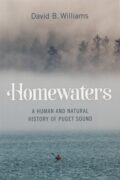
I highly recommend Homewaters — for the way it introduces the components of the Puget Sound ecosystem, but especially for how it weaves the various parts together.
One Response to Capturing Innerspace in the PNW