 When I looked up the web site for this book, the cover grabbed my attention with earnestness, elegance, and sheer power. I haven’t read the book yet, but if the book lives up to its cover, it will be a welcome and much needed addition to ocean related literature. The book’s reviews suggest that it succeeds with one of the holy grails of science: to convey important aspects of the science to the public without dumbing it down.
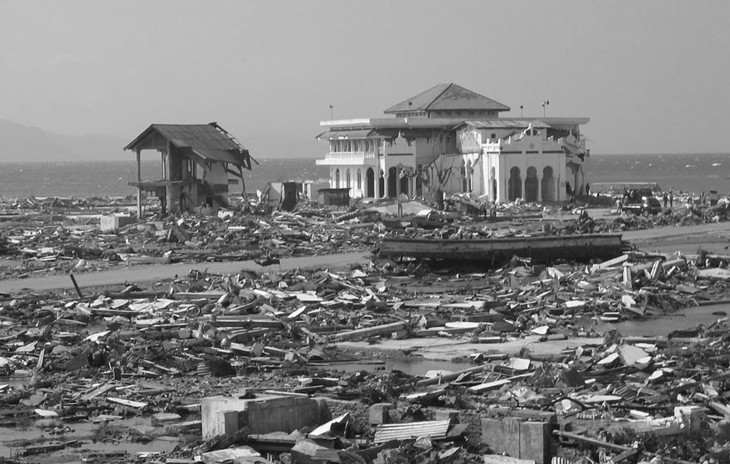
Why should the public care about understanding science? The author makes a compelling case for an area of science commonly thought to be abstract and only remotely related to human well-being: physical oceanography. Parker says, “When the sea turns its enormous power against us, our best defense is to get out of its way — but to do that, we must first be able to predict when and where it will strike.” The title of the book, The Power of the Sea — Tsunamis, Storm Surges, Rogue Waves, and our Quest to Predict Disasters, conjures up concrete images of what sorts of power the author is talking about.
I’m not in the habit of promoting books I haven’t read, but the author’s article in the December 2010 issue of Sea Technology showed that he was thinking very much in line with the thoughts that prompted the creation of SEA-Media and this web site. I’ll let him explain,
“Everywhere I looked, major marine programs were underfunded, programs that could have significant impacts on virtually everyone on the planet. Many of us, my colleagues and I, searched to understand the reason for the lack of adequate support from government funding agencies and the lack of interest in Congress. We decided that, ultimately, it could be traced back to a voting public totally unaware of the benefits they would directly or indirectly gain from ocean research.”
Dr. Bruce Parker was Chief Scientist for the National Ocean Service, and before that Director of the Coast Survey Development Laboratory and a director of the World Data Center for Oceanography. He is presently a Visiting Professor at the Center for Maritime Systems at the Stevens Institute of Technology in Hoboken, NJ.