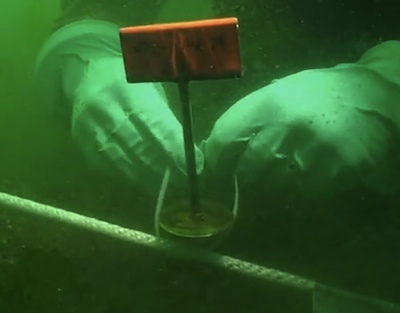
 The underwater world isn’t immune to pollution and other environmental problems, but it’s a lot harder to see what’s happening down there. Here in the Pacific Northwest the EPA Region 10 dive team is who looks at these things first hand. EPA’s Region 10 Dive Unit provides scientific diving services through inspections, sampling, surveys, contract oversight, and long-term monitoring. Sean Sheldrake, the regional dive officer who leads this team has posted more than 20 videos of his team at work underwater.
These videos range in topics from monitoring creosote at the bottom of Eagle Harbor in Puget Sound to watching for offshore changes related to the dam removal on the Elwha River; from an surveying an Oregon Coast dredged material disposal site to inspecting a seafood outfall from a salmon processor in Ketchikan, Alaska.
But wait! The team’s public engagement goes beyond posting a couple dozen videos on YouTube and a Facebook page. EPA divers provide outreach to K-8 students in the greater Seattle area about ocean stewardship. Presentations typically include pictures and video of creatures in Puget Sound as well as contaminated underwater sites to show how EPA uses scientific diving to help protect the ocean environment. Students learn about what they can do to improve the health of Puget Sound.