Movies

Return of the Plankton

Return of the Plankton DVD cover
Who eats whom?
Whose dads are guarding eggs?
What happens when a crab hides in an octopus den?

Seasons change, even underwater. Join a marine biologist to explore the rise and fall of some of the microscopic biomass and its place in the larger food web. From ratfish to dogfish, from seastar to seaspider, see who eats whom, when, and how. Whether you’re just curious, a serious student of our marine environment, or a looking for a way to entertain a room full of people, Return of the Plankton will take you on an exciting video journey underwater in Puget Sound.

Divided into 4 seasons, this half-hour movie is suitable for all ages. It has been used in classrooms from grades 3 through college.  Supplementary study aids are also included for classroom use.
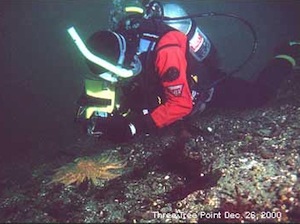
 

John Williams filming underwater

photo by Brett Fish

Return of the Plankton by Still Hope Productions was produced by Cameron Snow, filmed and edited by John F. Williams, with science advisor Bruce Claiborne.

“As its narrative gently unfolds, Return of the Plankton reveals to us that the sea itself has its seasons and undergoes changes as remarkable and beautiful as those more familiar to those of us who live on land. The delicacy of its images will inspire wonder in viewers of any age and calls on all of us to protect this usually hidden world.”

—Christopher Pavsek, Ph.D., Assistant Professor of Film, School for the Contemporary Arts, Simon Fraser University
Comments are closed.

Recent Media Articles

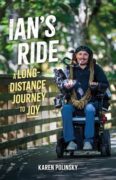
Ian’s Ride
Book Cover of Ian's Ride

In Ian’s Ride, Karen Polinsky tells an inspiring story of Ian Mackay learning ways to approach life after he had been paralyzed from the neck down. One of the things I especially liked about the story was how it focused on the process of finding solutions rather than dramatizing a negative view of the situation.

Read More »

Our Oceans

A five-episode series, each one about a different ocean. The underwater video is stunning, and it does a good job of pointing out ecosystem interconnections.

Read More »

The Accidental Ecosystem
cover of book The Accidental Ecosystem

Cities do, indeed, have their own ecosystems. These have developed over centuries of city growth, suburb growth, and other human impacts on the lands. This book added a new dimension to my understanding of how we are impacting nature.

Read More »

Earth For All

Earth for All was published in 2022 as a report to The Club of Rome. As I read it, I realized that it was part of a “new wave” of literature about addressing our current global problems — a wave that was based on systems thinking.

Read More »

Homewaters
Homewaters cover

I highly recommend Homewaters — for the way it introduces the components of the Puget Sound ecosystem, but especially for how it weaves the various parts together.

Read More »