Movies

Underwater Dust Mop

Detritus might be one of the least exciting parts of the food web, but the amazing color, shape, and behavior of some detritus eaters, like this California sea cucumber, make up for that.

This relative of sea stars and sea urchins crawls along the bottom picking up detritus with its tentacles and stuffing it into what might loosely be called a mouth. You can see a sea cucumber feeding in its natural habitat in this very short video captured by Laura James off Alki Beach, West Seattle.

http://vimeo.com/70391068

You can see some of Laura’s other amazing videos at Beneath the Looking Glass.

The California sea cucumber (Parastichopus californicus) is one of the more commonly eaten sea cucumbers, and it is occasionally seen by beach walkers at extreme low tides. The sea cucumber you’re more likely to see on the West Coast at low tide is the orange sea cucumber (Cucumaria miniata) which often wedges itself between rocks, and when the tide is in, it uses its tentacles to grab plankton out of the water.

Another unrelated fact about for the curious, a sea cucumber doesn’t “breathe” through its mouth, it uses its other end for that.

The California sea cucumber can also be seen feeding in the movie Return of the Plankton by Still Hope Productions.


Comments are closed.

Recent Media Articles

Ian’s Ride
Book Cover of Ian's Ride

In Ian’s Ride, Karen Polinsky tells an inspiring story of Ian Mackay learning ways to approach life after he had been paralyzed from the neck down. One of the things I especially liked about the story was how it focused on the process of finding solutions rather than dramatizing a negative view of the situation.

Read More »

Our Oceans

A five-episode series, each one about a different ocean. The underwater video is stunning, and it does a good job of pointing out ecosystem interconnections.

Read More »

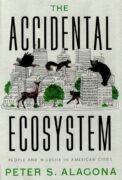
The Accidental Ecosystem
cover of book The Accidental Ecosystem

Cities do, indeed, have their own ecosystems. These have developed over centuries of city growth, suburb growth, and other human impacts on the lands. This book added a new dimension to my understanding of how we are impacting nature.

Read More »

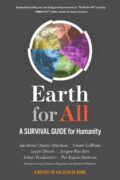
Earth For All

Earth for All was published in 2022 as a report to The Club of Rome. As I read it, I realized that it was part of a “new wave” of literature about addressing our current global problems — a wave that was based on systems thinking.

Read More »

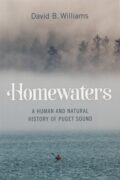
Homewaters
Homewaters cover

I highly recommend Homewaters — for the way it introduces the components of the Puget Sound ecosystem, but especially for how it weaves the various parts together.

Read More »