Movies

SPIDER CRAB SHEDS ITS SHELL

Jeff Adams of Washington Sea Grant called attention to this video with the following comments:

Whenever you look at a crab molt the “how does it do that?” factor is pretty high. Here’s a video of a crab molting that’s pretty amazing. Some of you may recall Greg Jensen saying the crabs consume much of their own muscle and the old shell in preparation for molting which actually makes it easier to get out of the old one. … Still… “how do they do that!?”

I wasn’t able to verify the origin of this video, but the information I found on the internet is:

Enoshima Aquarium (Fujisawa, Japan) has released some time-lapse footage of a molting Japanese spider crab (Macrocheira kaempferi), whose 3.8 meter (12 ft 6 in) leg span makes it the world’s largest arthropod species. The video was shot over a 6-hour period.

 

Add Your Comment

Recent Media Articles

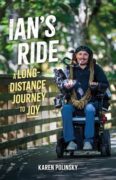
Ian’s Ride
Book Cover of Ian's Ride

In Ian’s Ride, Karen Polinsky tells an inspiring story of Ian Mackay learning ways to approach life after he had been paralyzed from the neck down. One of the things I especially liked about the story was how it focused on the process of finding solutions rather than dramatizing a negative view of the situation.

Read More »

Our Oceans

A five-episode series, each one about a different ocean. The underwater video is stunning, and it does a good job of pointing out ecosystem interconnections.

Read More »

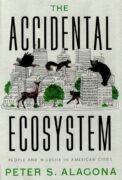
The Accidental Ecosystem
cover of book The Accidental Ecosystem

Cities do, indeed, have their own ecosystems. These have developed over centuries of city growth, suburb growth, and other human impacts on the lands. This book added a new dimension to my understanding of how we are impacting nature.

Read More »

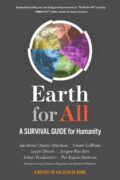
Earth For All

Earth for All was published in 2022 as a report to The Club of Rome. As I read it, I realized that it was part of a “new wave” of literature about addressing our current global problems — a wave that was based on systems thinking.

Read More »

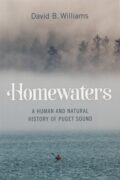
Homewaters
Homewaters cover

I highly recommend Homewaters — for the way it introduces the components of the Puget Sound ecosystem, but especially for how it weaves the various parts together.

Read More »